Image

Will the AI bubble burst or won’t it? Well, not for now. It’s keeping everyone busy: the results of companies like NVIDIA and TSMC pretty much decide whether a stock market rallies or crashes. That’s wildly impressive in such a short time, just like the speed at which AI has become the new normal. ‘I’ll just Google that’ turned into ‘Let me quickly ask ChatGPT’ in no time. The aura of all-knowing oracle followed quite soon.
Of course, there were critical voices too. Dominant technology has always produced doom-mongers. When the first IBM supercomputer appeared (basically: a calculator), mathematicians feared for their jobs. When Canva broke through, everyone suddenly became a ‘designer’. And then there’s the impact of Apple and Samsung’s high-end cameras in every smartphone. Suddenly everyone was Christopher Nolan.
But… no. If you believe LinkedIn, AI is quietly staging a coup in our industry. Which is logical: a platform where over half the content is AI-made can hardly be critical of itself. Creatives would become redundant, ideas automated, agencies reduced to prompt factories.
AI hasn’t made us smarter. It has made us faster and, in some areas, even better. Of course, some roles will disappear. But new ones will appear too. In our business, standing still is moving backwards, with or without AI.
AI doesn’t invent anything. As Vince Gilligan (the mind behind Pluribus and Breaking Bad) put it: ‘AI is the world’s most expensive and energy-intensive plagiarism machine.’ And yes, that quote is real.
AI lacks vision. A point of view. Gut feeling. Cultural antennae, human experience, emotion and pain. What it does have: speed. AI is that tireless junior who never complains, tries everything and gives you 10 directions in 5 minutes, where you used to lose half a day. AI won’t decide for you, but it will help you see more quickly what works and especially what doesn’t. And that buys you time for the real thinking, for being genuinely creative.
A prejudice with a grain of truth. AI is extremely good at reproducing and remixing what already exists. So yes, it’s also great at churning out safe, grey, middle-of-the-road solutions. But that’s not an AI problem. That’s a creative problem. Because AI still needs a prompt. That’s where mediocrity starts. Strong ideas are not replaced by AI, they’re surfaced faster. Weak ideas are exposed faster. Thankfully, creativity is not an exact science.
No. And that’s where the debate often goes wrong. In recent months, we’ve seen a deliberate counter-movement against certain AI-driven campaigns. Think of Intermarché or Apple iPhone, with ‘handmade’ commercials. Intermarché managed to strike an emotional chord, Apple less so. Was the work strong because it wasn’t AI? Definitely not. The underlying idea was strong, full stop.
If you compare that one-to-one with the much-derided Dutch McDonald’s Christmas AI commercial, you’re missing the point. That commercial was … mediocre. Especially in execution, and quite possibly in the idea too. Meanwhile, there are plenty of examples where AI is used well.
Treating AI as your thinking partner is like dancing into a bullring in a bright red cat-suit: an unbelievably bad idea. AI is a lever for thinking, not the starting point. To have anything to spar with, you first need an idea of your own. An agency that starts with the tool instead of with the question (and the solution) will always produce grey work, with or without AI. And we already have more than enough grey, beige and vanilla.
It’s up to us to think sharper, be smarter, stand behind our choices more firmly and show even more courage in our creativity. Mediocrity will only increase. A race of quantity versus quality. More than half of all online content is already AI-generated. Let that sink in.
AI doesn’t come up with or improve ideas. It gives us extra hands. And if we use those hands well, both brain halves are free again. And that, dear reader (kudos for making it this far), brings us neatly to how we at Cartel Agency use AI in smart ways and occasionally, yes, even abuse it.
Jo Mellemans, co-CEO of Glowi, asked us to create an innovative recruitment film for a new CEO for Het Poetsbureau. A brilliant challenge, because a) that’s a very specific profile you don’t just pull off LinkedIn or Jobat, and b) the film also had to be a test case for Glowi’s innovative power. A win-win. And, for me personally, very much a ‘kid in a candy store’ feeling.
Together with Gilles, creative and AI wunderkind at Cartel Agency, we developed a concept, storyboard and storyline. On paper: what if a whole series of famous CEOs applied for the job? That set the scene for the pond we’d be fishing in.
We would never have made this film without AI. But it wasn’t made by AI. It was made with AI, by Gilles – a human –, who added a lot of humour, a sharp sense of timing, nods to current events and a generous dose of terrible wordplay (‘Wir schrubben das!’).
You can see the result below. Every frame was generated using AI models, and so was all the audio. On top of that, we used traditional image, video and audio tools to stitch hundreds of fragments into one coherent whole.
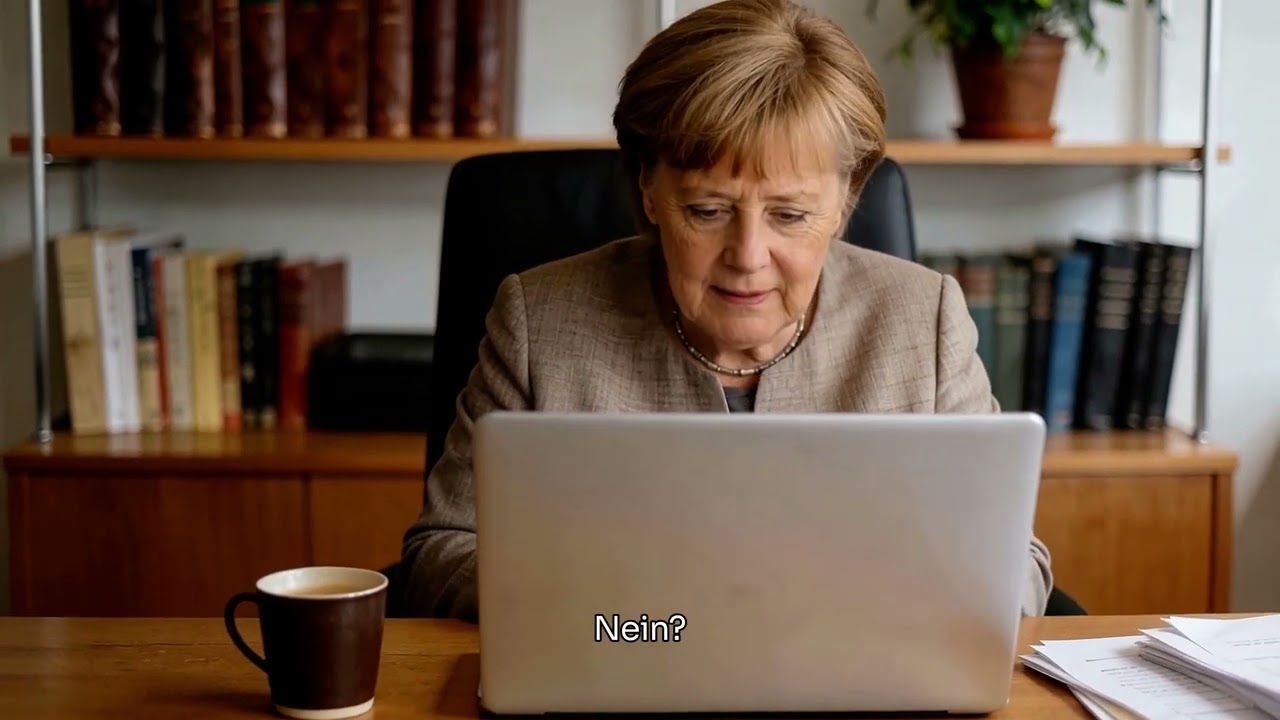
For the nerds only, here’s a shortlist of some of the techniques and models we used to make this video:
AI opens a whole tin of possibilities, but don’t expect it to cook you a Michelin-star meal. As a creative, you’re still the one in the kitchen. We’re the ones who guard and create good taste.


